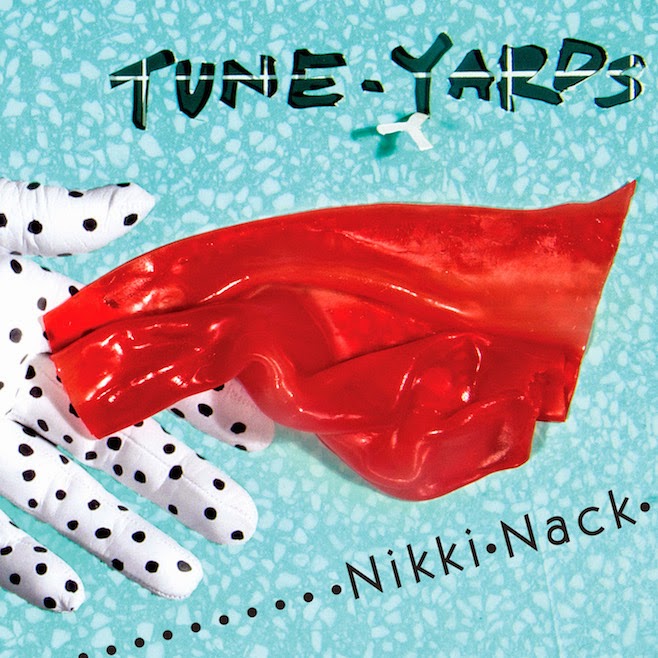
Since the last album, whokill, in 2011, everything has gotten bigger, more complex, and, for the most part, better for the band. The brass and bass, which were huge driving forces on whokill, have been toned down in favor of a more complex, mulittracked electronic approach which at times borders on synthpop.
However, she hasn't ditched her emphasis on rhythm. Along with bassist Nate Brenner, the percussion and syncopation has reached new heights, and it complexity now rivals that of Thom Yorke's electro-precussive side project Atoms For Peace. But the production is also far bigger now than it has been on any of Garbus's previous offerings. The horn section that so wonderfully colored whokill are mostly absent, but in their place are a bevy of glorious electronic synths are present here. "Wait for a Minute" features cool, subtle background washes, while "Time of Dark" is backed by buzzy techno that wouldn't sound out of place on a 2000s era Nine Inch Nails record.
Garbus, as always, comes through with a big and bold personality. She brings plenty of swagger and attitude, her lyrics often bring the sense that she is a survivor, incapable of being held down. She is also the chief percussionist in the band, but this time around she's added another drummer as well.
"Water Fountain" with its playful and innocent nature, sounds like it could be a jump rope rhyme for the kids on the sidewalk. But Garbus begins to cut loose as the track progresses, and it builds into something much more forceful and intricate. By the time the familiar melody arrives for the final chorus, it's the same but it has altogether changed. The clanging electronic production and much more complex vocal arrangements shows off Garbus's impressive ability to mix various layers together and make a song that is much more than the sum of its parts.
"Wait for a Minute" takes things in an opposite direction, showing off her mastery at slowing down and taking on more serene material, as well as confirming her status as a fantastic singer. She delivers power but also shows she knows how to reel herself in and deliver, sublime, beautiful melodies. The song shows off her stunning range, and the production is bang up as well. "Wait for a Minute" is one of the best synthpop songs of the year, and one of the best she's ever done. It offers a dramatic contrast to her raw, jackhammer delivery on songs like "Real Life." Her ability to belt it out is impressive, but this song demonstrates that when she keeps it up too long it can become one note and lack variation, and after a while it grates on the nerves.
Meanwhile, "Stop That Man" continues to explore a lyrical theme of violence and crime in her native California, previously examined on "Gangsta" from whokill. It also sounds the most like her old material, as she declares in her ominous lower register that we'll have to be our own policeman. "Left Behind" and "Sink-o" are the most complex tracks rhythmically, but also are the most bass heavy and provide the best opportunities to shake your booty.
Nikki Nack is a strong listen from front to back, but the problems that do come up on on the album tend to result from mixing and arranging the various layers together. This is the most complex album Garbus has put together. There are more musicians, more layers, and just generally more going on here than on either of her two previous albums. Although it happens rarely, in some places things don't come together quite right. Opener "Find a New Way" kicks off with an awkward Vampire Weekend sounding opening and abrasive FIND A NEW WAY refrain. All the layers previously present in the song are reintroduced simultaneously at the end, but instead of meshing well with one another they all clash and conflict with one another.
The biggest offender, however, is "Look Around," which is super surreal but in all the wrong ways. Her dissonant ukulele combines with something in the background that sounds like a demented cuckoo clock, and is paired up with a halfhearted vocal track that doesn't mesh well with the music at all.
The entire album is abound with an African, Caribbean and world tribal influences, as well as playground chants that give the album a playful and inviting feel. It may sound like a lot to wrap your head around, and it is. But what's great is that the entire album operates off a pop sensibilities, so every song is pretty easy to get into without taking too many listens to get into, but the more time you do invest into this record the more layers you peel back that you may never have even noticed in the first place. This is what makes this one of the most refreshing and rewarding albums in recent memory.


